
Is Kalshi Legal in Texas?

Summarize this post
Kalshi is fully legal in Texas. Even though the Lone Star State still hasn’t legalized traditional online sports betting, Texans aged 18 and over can sign up, deposit funds, and trade event contracts on Kalshi right now. The reason comes down to one critical distinction: Kalshi isn’t a sportsbook. It’s a federally regulated financial exchange, putting it in an entirely different legal category than anything Texas gambling law was written to govern.
If you’ve been wondering why a prediction market can operate freely in a state that prohibits sports betting, this guide will go over the regulatory framework, market offerings, taxes, banking, and responsible trading.
Key Takeaways
- Kalshi is legal in Texas if you are 18 and over and a resident of the state.
- Because it is regulated federally by the CFTC (it’s a Designated Contract Market, not a betting product), it’s not subject to Texas’ state gambling laws.
- You’re trading contracts instead of placing bets, which is why Kalshi is not considered a sportsbook.
- With the regulatory landscape constantly in flux, it’s important to stay informed so you’ll know exactly where prediction markets stand.
Why Kalshi Is Legal in Texas
Texas has some of the most restrictive gambling laws in the country. Traditional sports betting remains illegal, and the Legislature has repeatedly failed to advance bills that would change that. Yet Kalshi operates openly, and it does so for a very specific legal reason.
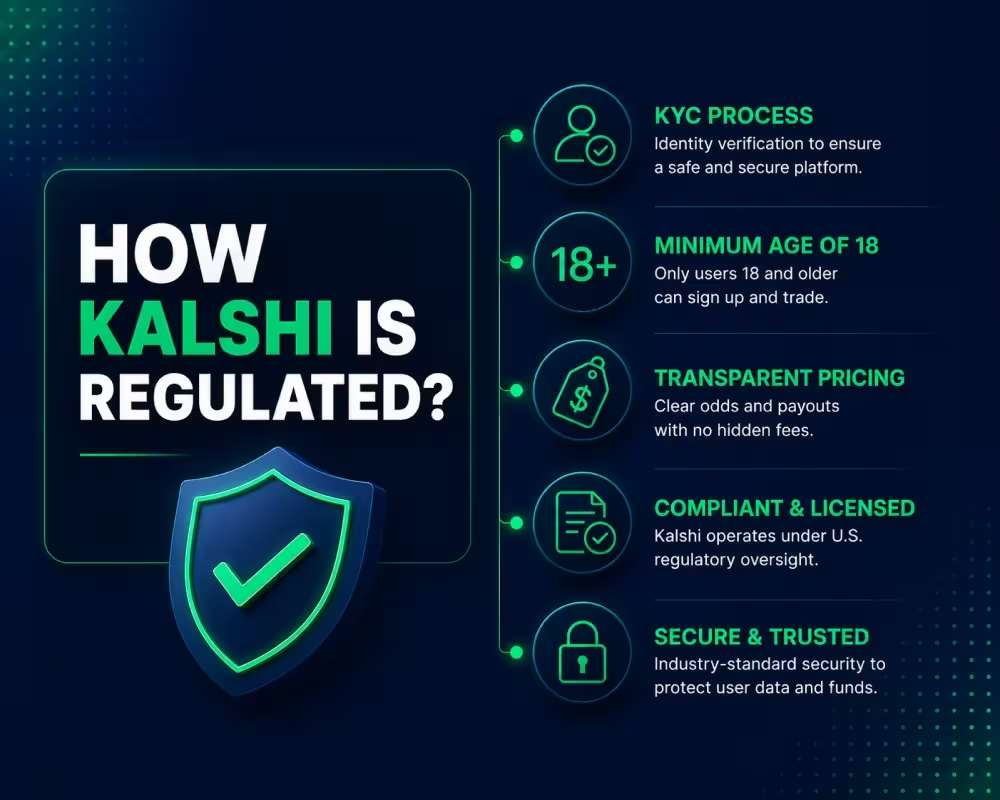
Kalshi holds a federal license as a Designated Contract Market (DCM) issued by the Commodity Futures Trading Commission (CFTC). This is the same federal regulator that oversees futures and derivatives markets in the US. Because Kalshi is regulated as a financial exchange at the federal level, it doesn’t fall under the jurisdiction of Texas state gambling laws. Federal regulation preempts state gambling statutes in the same way a federally chartered bank doesn’t need a separate license from every state it operates in.
This isn’t a loophole; it’s the intended legal structure. Kalshi spent years working with the CFTC to earn its DCM designation, including winning a significant federal court battle in 2024 that affirmed its right to offer election contracts. That ruling also helped clarify why a CFTC-regulated exchange can operate in states like Texas that haven’t legalized sports betting.
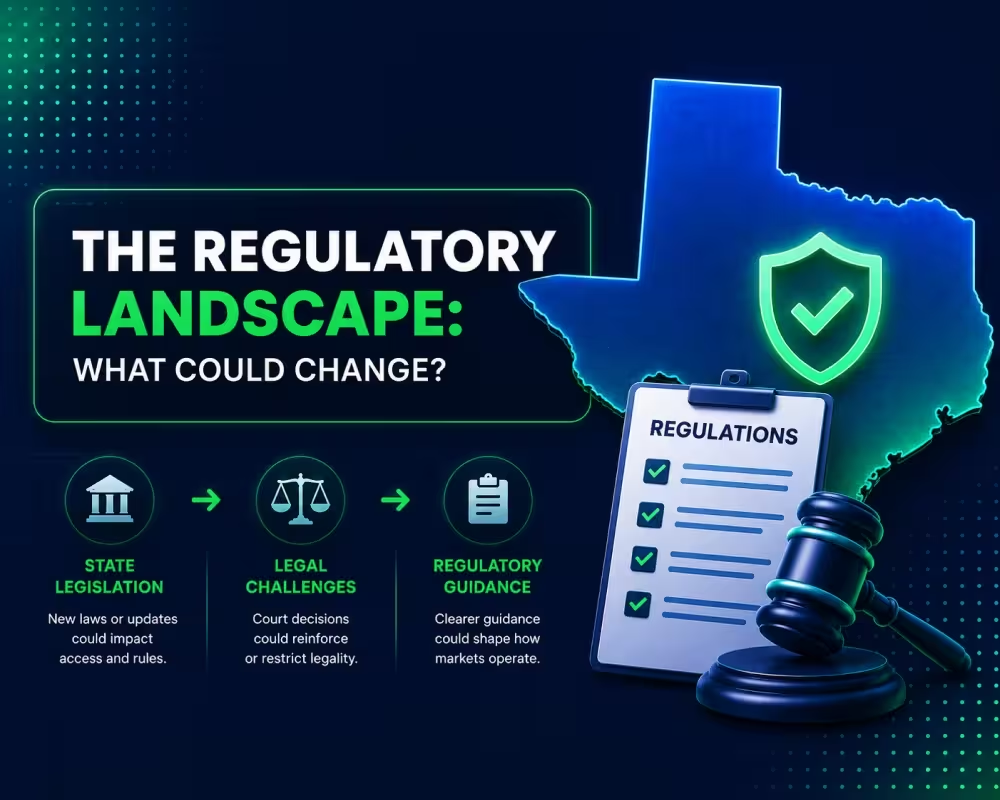
But, back in September 2025, CFTC staff issued an advisory to remind market participants that state gambling laws can still apply to sports-related event contracts on CFTC-registered venues. Basically, this means access in Texas is available today, but state officials could potentially act if they chose to. As of June 2026, no such action has been taken, and the Kalshi prediction app continues to accept Texas residents without restriction.
Kalshi vs. Traditional Sports Betting in Texas
People often ask whether Kalshi is just sports betting dressed up in different clothes. It isn’t and the differences go deeper than marketing language (or clothing, to keep with my analogy).
A traditional sportsbook accepts wagers and takes the opposite side of every bet. Instead, Kalshi works like an exchange. You’re trading contracts against other users in a peer-to-peer marketplace, and prices move based on supply and demand, just like we learned in high school economics class.
There’s no bookmaker setting lines and adjusting margins. If you think the Houston Texans have a 60% chance of winning the AFC South but the market prices them at $0.44, you can buy contracts at that price and profit if you’re right.
The regulatory structure is also entirely different. Sportsbooks operate under state gaming commissions. Kalshi operates under the CFTC. The tax treatment follows the same divide. Sportsbook winnings can generate a Form W-2G, while Kalshi trading activity is typically reported via Form 1099-B, the same brokerage-style document used for stock and options trading. For Texans, this matters practically: Texas has no state income tax, so profits from Kalshi are subject only to federal taxes.
Kalshi vs. Traditional Sportsbooks
| Feature | Kalshi | Traditional Sportsbook |
| Regulated By | CFTC (federal) | State gaming regulator |
| Product Type | Event contracts | Sports wagers |
| Trade Against | Other users (peer-to-peer) | The sportsbook itself |
| Can Exit Early? | Yes, by selling contracts | Usually limited to cash-out offers |
| Legal in Texas? | Yes | No |
| Typical Tax Form | 1099-B | W-2G (when applicable) |
How Kalshi Event Contracts Work
Kalshi markets are structured around simple yes-or-no questions tied to real-world outcomes. Every contract trades between $0.01 and $0.99. If you’re correct when the market resolves, the contract pays out $1.00. If you’re wrong, it settles at $0.
Say Kalshi lists the question: Will the Houston Texans win the AFC South? Suppose the Yes contracts are trading at $0.44. That price reflects the market’s collective judgment that there’s roughly a 44% chance of that outcome. If you believe the real probability is closer to 60%, you might buy contracts at $0.44. If the Texans clinch the division, each contract pays $1.00 (a profit of $0.56 per contract). If they don’t, you lose your $0.44.
Here’s where those differences from a traditional sportsbook really come in: You don’t have to wait for settlement. Kalshi is a live exchange, which means you can sell your contracts at any time before the outcome is decided. If the Texans go on a winning streak midseason and the contract rises to $0.70, you can sell your position and lock in a profit without waiting for the final result. This ability to enter and exit positions is one of the fundamental ways Kalshi resembles a financial market more than a traditional sportsbook.
Each market clearly states the question, the data source used for settlement, and the exact expiration date, so you always know the rules before you commit any capital.
What Texas Residents Can Trade on Kalshi
One of Kalshi’s biggest advantage over traditional sportsbooks is the sheer breadth of markets; you might even say they’re “Texas-sized.” Lone Star State traders aren’t limited to box scores and point spreads. They can trade on outcomes across sports, politics, economics, weather, and culture.
Sports
The most popular category for trading is sports event contracts. Texas users will find contracts tied to local professional teams throughout their respective seasons, including the Dallas Cowboys, Houston Texans, Dallas Mavericks, Houston Rockets, San Antonio Spurs, Texas Rangers, Houston Astros, and Dallas Stars. Major college programs (Texas, Texas A&M, Texas Tech, Baylor, TCU, and others) also appear during their respective seasons.
Markets can be built around individual games, but can also include division titles, playoff berths, conference championships, and league outcomes. One-off global events, such as the 2026 FIFA World Cup, also tend to attract significant trading interest from Texans.
Politics and Elections
One of Kalshi’s fastest-growing categories is political prediction markets. You’ll encounter markets involving statewide elections, gubernatorial races, Senate contests, and nationally significant political developments. Texas political figures often attract substantial market interest due to the state’s size and influence in federal politics, like if Ted Cruz will run for president again. These markets are entirely unavailable at any traditional sportsbook.
Economics and Finance
Traders who follow macroeconomic data closely can take positions on Federal Reserve interest rate decisions, CPI and jobs report outcomes, GDP releases, and other major economic indicators, such as gas and grocery prices, and inflation overall. Even specific geo-political events such as the Strait of Hormuz being opened or closed often will have a market available. These markets tend to attract users who have strong views on monetary policy or who want to hedge against economic uncertainty.
Weather
Texas-specific weather markets can include hurricane landfall probability, extreme heat events in cities like Austin, Dallas, or Houston, and rainfall levels. These markets typically use National Weather Service data as their settlement source and offer short windows from listing to resolution.
Pop Culture and Entertainment
Award shows, album releases, major streaming milestones, and trending cultural moments show up on Kalshi regularly. Entertainment markets are generally shorter-lived but can generate significant activity around tent-pole events, like the Super Bowl halftime show, the Grammys, box-office numbers, and critic scores. An example, would be “The Odyssey: Rotten Tomatoes score – Above 90/Below 90.”
A Brief Timeline of How Kalshi Got Here
Understanding Kalshi’s legal status in Texas is easier with a bit of context:
- 2020: KalshiEX LLC (the parent company) receives its federal DCM designation from the CFTC, becoming one of the first prediction exchanges to secure this license in the United States.
- 2021: Kalshi opens to the public, giving users the chance to trade event contracts under federal oversight.
- 2024: A federal court rules in Kalshi’s favor in a dispute over election contracts, narrowing the CFTC’s ability to block those markets. The ruling reinforces the legal framework that allows Kalshi to operate in states that haven’t legalized sports betting, like Texas.
- Early–Mid 2025: Kalshi grows its user base in the US while legal challenges emerge with different regulatory dynamics in play. Sports listings also expand significantly.
- September 2025: CFTC staff issues an advisory noting that state gambling laws can apply to sports-related event contracts on CFTC-registered venues. The advisory doesn’t restrict Texas access, but it does introduce a degree of future uncertainty.
- June 2026: With no state-level enforcement action pending, Kalshi remains fully open to Texas residents.
Getting Started in Texas: Registering for Kalshi
Signing up takes only a few minutes:
- Head to Kalshi’s official site or download the iOS or Android app.
- Create your account with your email address and a secure password.
- Complete identity verification (KYC) by uploading a government-issued ID. This is required before you can trade and I advise you to do this right away so it’s easier to make withdrawals later on.
- Fund your account via bank or wire transfers, debit or credit card, or cryptocurrency.
- Claim any prediction bonuses offered to new traders.
- Browse available markets and place your first trade.
Kalshi also offers responsible trading tools, including voluntary trading breaks, personalized monthly funding caps, and a full self-exclusion option.
Bottom Line
For Texans who want to act on their reads about sports, politics, the economy, or culture, Kalshi is the most regulated and legally sound option currently available in the state. Traditional sports betting may still be years away from legalization in Texas, but Kalshi isn’t waiting for that conversation to play out. It’s here, it’s federally regulated, and it’s open for business.
Frequently Asked Questions
Yes. Kalshi is a CFTC-regulated Designated Contract Market and is available to Texas residents aged 18 and over. Texas state gambling laws do not apply to the platform.
No. Kalshi operates as a federal financial exchange where users trade event contracts against each other. Traditional sportsbooks operate under state gaming licenses and take the other side of your bets directly. The regulatory, structural, and tax treatment are fundamentally different.
Yes. Trading profits on Kalshi are taxable. The platform typically issues Form 1099-B for eligible activity. Texas has no state income tax, so profits are subject to federal tax only. Consult a tax professional for guidance specific to your situation.
You must be 18 or older to trade event contracts on any prediction app. Identity verification is required before trading.
It’s possible, though no restriction is imminent. The scenario most likely to affect availability would be a significant shift in CFTC policy or targeted state-level enforcement, neither of which appears likely in the near term. Monitoring developments is wise if you plan to trade actively.