 Main menu

Prediction Markets
Better Markets: ‘Hard to Believe’ Supreme Court Wants CFTC to Regulate Sports Betting
Posted on: May 14, 2026, 11:50h.
Last updated on: May 15, 2026, 09:44h.


- Better Markets asserts that the PASPA repeal made sports wagering a states’ rights issue, leaving no room for federal intervention
- The group accuses the CFTC of attempting to regulate sports betting while “excluding the experience and expertise” of state-level regulators
- The public policy group labels it “obvious” that these markets offer sports betting under a different name to bypass strict state laws
Public policy organization Better Markets has expressed its belief that the repeal of the Professional and Amateur Sports Protection Act (PASPA), which took place eight years ago today, serves as a reminder that states, not the Commodities Futures Trading Commission (CFTC), make the regulatory calls on sports betting.
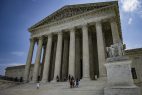
In a new report, Better Markets, which focuses on consumer protections in the financial services space, says the CFTC is attempting to regulate sports event contracts traded on prediction markets at the exclusion of the states.
Better Markets, a vocal critic of prediction markets, has suggested what amounts to CFTC circumvention of state regulation may not sit well with the Supreme Court.
When the Supreme Court struck down the federal law that prevented states from legalizing sports gambling, it left the issue of whether to legalize sports gambling to the states,” said Better Markets Director of Securities Policy Benjamin Schiffrin in the report. “It is hard to believe the Supreme Court intended for the CFTC to become the nation’s sports gambling regulator and to prevent the states from protecting their own citizens.”
That perspective is relevant because there’s widespread belief that the ability of prediction market operators to continue offering sports derivatives likely hinges on the Supreme Court hearing related cases — something that’s not expected to happen until 2027 at the earliest.
CFTC Believes the Law Is on its Side
Of late, the CFTC, the federal regulator for prediction markets, has taken up legal challenges against several states on the grounds that states are overstepping their regulatory authority by attempting to exert oversight of federally regulated derivatives.
Schiffrin notes the CFTC is attempting to leverage a 2010 law passed by Congress that granted the CFTC regulatory authority over event contracts, but that was on the basis that the derivatives are primarily used by financial market participants as hedging instruments. In fact, the law contained provisions addressing sports betting.
“Senator Blanche Lincoln, the author of the provision, said that the intent was to prohibit event contracts ‘around sporting events . . . that would be used solely for gambling,’” observes Schiffrin. “So this law told the CFTC to prevent market participants from using event contracts for gambling; it said nothing about the ability of the citizens of any state to bet on sports or the ability of states to legalize or prohibit sports betting.”
Said differently, prediction market critics believe the 2010 law passed by Congress limits event contracts to areas with legitimate financial or hedging purposes and those naysayers believe the CFTC and the prediction markets industry are exploiting loopholes to broaden the expanse of betting, particularly in states where sports wagering isn’t legal.
What SCOTUS Said in PAPSA
PASPA was struck down in the US Supreme Court following an appeal by the state of New Jersey, which had previously lobbied to launch sports betting after passing legislation at state level to allow the vertical. New Jersey was repeatedly blocked by federal courts, prompting the state to petition the Supreme Court for a definitive ruling.
This ruling set the stage for states to make their own calls on the legality of sports wagering, effectively firing the starting gun on a sports betting market which now numbers 39 states.
In the 7-2 PAPSA ruling, the Supreme Court acknowledged the importance of sports wagering, but at its core, the decision makes clear that barring Congressional action that sets a uniform standard for the entire country, the call is the states’ to make.
“The legalization of sports gambling is a controversial subject. Supporters argue that legalization will produce revenue for the States and critically weaken illegal sports betting operations, which are often run by organized crime,” according to the opinion. “Opponents contend that legalizing sports gambling will hook the young on gambling, encourage people of modest means to squander their life savings and earnings, and corrupt professional and college sports. The legalization of sports gambling requires an important policy choice, but the choice is not ours to make.”
Some legal experts speculate that if the high court does hear a prediction markets case, it could be bad news for the industry because the current composition of the court implies siding with states’ rights and tribal sovereignty — issues the industry is accused of flouting.

 Most Read

Another Shooting Near Las Vegas Strip Casino Injures Man
 972,536 views

Vintners Oppose Napa Valley Casino
556,157 views




Conversation (1 comment)