 Main menu

Canadian Gaming
Alberta iGaming Operators Miss 2026 World Cup Acquisition Opportunity
Posted on: June 10, 2026, 07:06h.
Last updated on: June 11, 2026, 09:31h.


- The 2026 FIFA World Cup kicks off tomorrow, with 48 teams playing 104 matches across three nations through to July 19
- Alberta iGaming market is expected to launch on July 13, giving licensed operators just six days to capitalize on acquiring customers from the year’s biggest sports betting event
- 43 iGaming operators are currently registered with Alberta regulator
An industry veteran and consultant said Alberta missed a key opportunity to launch its regulated iGaming market earlier and capitalize on World Cup-driven customer acquisition.
Massive Customer Acquisition Opportunity
The new regulated market in Alberta is scheduled for launch July 13, just six days before the final match of the World Cup is set to be played in East Rutherford, New Jersey.
“They should have opened long before, to allow operators to have a seamless entry prior to the World Cup,” said Phill Gray, the former head of sports betting operations at Sports Interaction, and sports betting industry consultant.
“That’s the province’s mistake. The gaming world has been planning this for years. It’s going to be one of the biggest betting events ever. Think half a dozen Superbowls in a month worth of revenues.
“[Alberta] should have been up and going prior to the NHL playoffs. Usually, July is a barren season for sports betting. [Operators in Alberta] might get a bit of a bump out of [The World Cup], but mostly anyone betting would be solidly entrenched at their book and likely not jumping to a new one.”
Expanded Tournament
Operators that are currently offering their services in the province will simply transfer existing Alberta accounts to their mirror Alberta site.
Gray added that major operators such as FanDuel and DraftKings, which are entering the market in July, are unlikely to rely on the final World Cup matches for meaningful customer acquisition and will instead focus their marketing efforts on NFL betting.
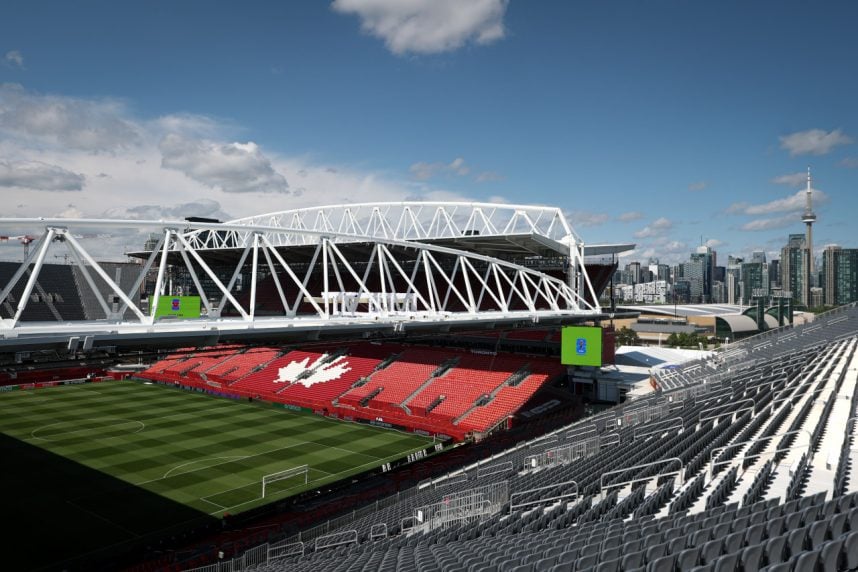
The 2026 FIFA World Cup will feature 48 teams, playing 104 matches in locations across Mexico, the United States and Canada. The tournament starts tomorrow (June 11) in Mexico City Stadium, with Mexico playing South Africa. The first match in Canada is Friday (June 12) at Toronto Stadium, with Canada playing Bosnia and Herzegovina.
$4 Billion in Projected Handle
According to research firm Eilers & Krejcik Gaming, World Cup betting handle could surpass USD $4 billion in the U.S.
H2 Gambling Capital, the global gambling sector market data provider, has estimated that $60 billion will be wagered on the tournament through legal sportsbooks. Out of that, H2 estimated that $5.7 billion will be wagered across the three host nations – $2.9 billion for the U.S., $2.5 billion for Mexico, and $0.3 billion in Canada.
Those Mexico, Canada and U.S. betting numbers will accelerate as the home country teams advance through the tournament. According to a study released by FanDuel Canada, 43% of Canadian soccer fans plan to support more than one nation during the tournament, with second-team support driven more by heritage (37%) and family connection (21%).
Ten Times the Number of Futures Markets
“Fueled by an expanded field and prime viewing windows for U.S. audiences, we expect the World Cup to be one of the biggest and most dynamic betting events we’ve ever booked and a record-shattering moment for soccer wagering,” Dominic Hammond, Senior Vice President of Sports at Caesars Digital commented.
“If the U.S. Men’s National Team makes a deep run, that’s when things could really accelerate, driving massive spikes in engagement and betting with each match. At the same time, the tournament’s unpredictability and the surge in parlay betting mean just a few key upsets can significantly swing outcomes.”
Hammond said Caesars is rolling out the “largest and most advanced” World Cup betting menu in company history, including more than 10 times the number of futures markets compared to the last World Cup in 2022.
Poll: 49% Will Make World Cup Bet
In a study released yesterday (June 9) by the Chartered Professional Accountants of Canada, 13% of Canadians said they are likely to place a bet during the World Cup, rising to 49% among regular sports betters.
Research published this month by YouGov Canada, commissioned by Tonybet, found that eight in ten Canadian igamers plan to wager on the tournament (83%), and almost six in ten (59%) said they would consider trying a new betting platform to do so.
Nationally, the same three factors lead the list of reasons Canadian bettors give for choosing one platform over another: promotions (15%), bonuses (10%), and the speed with which winnings can be withdrawn (10%).
More than half of those planning to bet on the tournament (57%) expect to spend over $300 across the competition, with 31% expected to spend at least $500, and almost one in ten (9%) over $1,000.
Precision Over Scale
Yohan Mathew, BetMGM’s director of marketing, said the company has learned a great deal from previous large-scale acquisition events.
“It is about precision over scale,” he said, during a panel discussion at SBC Summit Canada in May.
“Certainly, top of funnel you’re going to get a ton of new players coming through, but it’s going to be on us to find that balance between the right CPAs (cost per acquisition), acquiring players that are actually going to be valuable, and then delivering an experience where they’re going to want to stick around and stay on the platform.
“So, I feel like this is one of those times where it’s easy to get carried away. I think the takeaway is really like finding that balance, leaning into the localization, and then the tactical plan will follow from there.”
Alberta Market Goes Live July 13
Mathew was referring to BetMGM’s marketing plans in Ontario, where the company has been licensed and operating for four years. Gray added that Alberta is also expected to be a strong market, and that the opportunity to grow businesses through World Cup activations should have been available to licensed operators in the province.
According to Alberta Gaming, Liquor & Cannabis (AiGC), the provincial regulator, 43 igaming operators have registered to go live July 13, many of those operators new to the market. BetMGM is one of those.
At SBC Summit Canada, Dale Nally, the Minister of Service Alberta and Red Tape Reduction of Alberta, told an audience he wanted to launch earlier. As Casino.org reported, according to an industry source, the push in March was to launch May 20, which created panic in the industry, in large part because at that time iGaming operators didn’t have all the AiGC policies.

 Most Read

Another Shooting Near Las Vegas Strip Casino Injures Man
 972,360 views

Vintners Oppose Napa Valley Casino
555,992 views


Conversation (0)
Be the first to comment on this article.