 Main menu

Tribal Gaming
Judge Rejects Bid to Reopen Scotts Valley Casino, Calls $10M Losses ‘Self-Inflicted’
Posted on: October 2, 2026, 09:16h.
Last updated on: October 2, 2026, 12:36h.


Key Points
- Scotts Valley invested more than $10 million in its casino project despite warnings from a federal court not to rely heavily on its initial legal victory
- The tribe claims its shuttered 17-machine Preview Casino costs $235,247 monthly to maintain—a figure U.S. District Judge Trevor McFadden called "questionable."
- The U.S. Department of the Interior reversed its 2025 approval after reevaluating evidence, concluding Scotts Valley lacked a significant historical connection to Vallejo


A federal judge has accused the Scotts Valley Band of Pomo Indians of “rolling the dice” by pouring $10 million into its proposed Vallejo, Calif., casino despite knowing the project was in serious legal jeopardy.
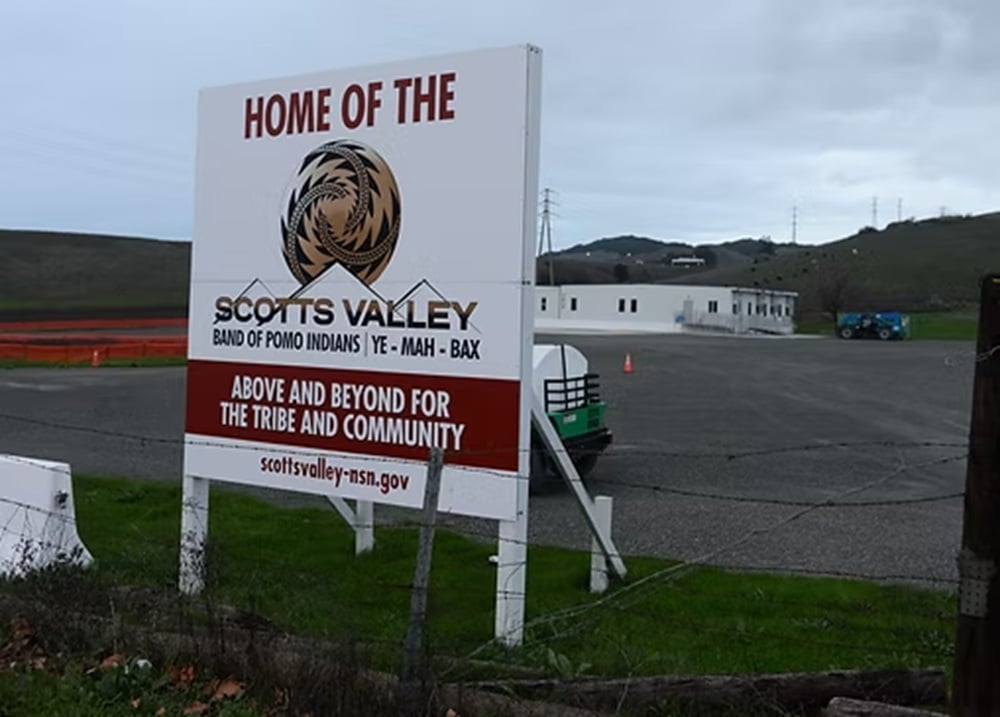
U.S. District Judge Trevor McFadden said the tribe’s resulting financial losses were largely “self-inflicted” as he rejected its bid to temporarily overturn a Department of the Interior decision blocking gaming on the site.
“Scotts Valley rolled the dice and invested anyway,” McFadden wrote in the ruling, adding that the tribe “could have avoided sinking $10 million into a casino project that it knew was in serious legal jeopardy.”
The unusually pointed language came as McFadden denied the tribe’s request for a preliminary injunction that would have revived federal approval for gaming on a Vallejo property earmarked for a $700 million casino resort.
$235,247 a Month to Maintain Temporary Casino
Scotts Valley told the court it invested more than $10 million after securing a favorable Interior ruling in January 2025, including developing a temporary “Preview Casino” at the site.
That facility, consisting of two modular buildings containing 17 Class II gaming machines, opened on a limited basis July 24—just one week before Interior reversed course and ruled that the property was not eligible for tribal gaming.
Scotts Valley claimed it was now spending $235,247 per month maintaining the shuttered facility and the infrastructure needed to restart gaming.
McFadden described that figure as “questionable,” while also finding some of the tribe’s documentation for its $10 million investment lacked detail. More than $2 million was categorized simply as “Admin Office,” while another $4 million-plus category contained brief descriptions of other expenditures.
More fundamentally, the judge said Scotts Valley had proceeded despite knowing Interior was actively reconsidering whether the site qualified for gaming. A previous court ruling had specifically warned the tribe against placing undue reliance on its temporary victory.
Long-Running Casino Battle
Scotts Valley has spent a decade attempting to establish a casino in Vallejo, about 80 miles from its traditional Clear Lake homeland.
Interior initially rejected the application in 2019 before a federal court ordered the department to reconsider. In January 2025, Interior reversed and determined the property qualified for gaming under a federal exception covering land restored to tribes that previously lost federal recognition.
The department subsequently reopened the issue after concerns that evidence submitted by other tribes and interested parties had not been considered.
After reviewing that evidence and a lengthy response from Scotts Valley, Interior reversed its decision again in July, concluding the tribe had not demonstrated the required “significant historical connection” to the Vallejo land.
This prompted Scotts Valley to sue Interior, arguing the department improperly reopened its earlier approval, failed to adequately justify reversing course, disregarded the tribe’s reliance on the 2025 decision, and violated its due-process rights.
McFadden found Scotts Valley had not shown it was likely to succeed on any of the four claims. He also rejected its arguments that the casino shutdown was causing irreparable economic and sovereign harm.
The ruling keeps the casino closed for now. Scotts Valley’s lawsuit against Interior will continue, and McFadden has yet to rule on the case itself.

 Most Read
Another Shooting Near Las Vegas Strip Casino Injures Man
 972,188 views
Vintners Oppose Napa Valley Casino
555,835 views


Conversation (0)
Be the first to comment on this article.