 Main menu

Prediction Markets
Kalshi Has Earned $35 Million From Parlays While Arguing It’s Not a Sportsbook
Posted on: May 14, 2026, 08:32h.
Last updated on: May 15, 2026, 10:21h.


- Kalshi has made $35 million this year alone on grouped sports event trades
- Prediction markets critics say such trades constitute parlay sports betting
Kalshi refutes claims that the prediction market is essentially operating as an unlicensed sportsbook by facilitating sports event contract trading. However, a new report suggests the online exchange has nonetheless made tens of millions of dollars from traders bundling sports events into a single option this year alone.
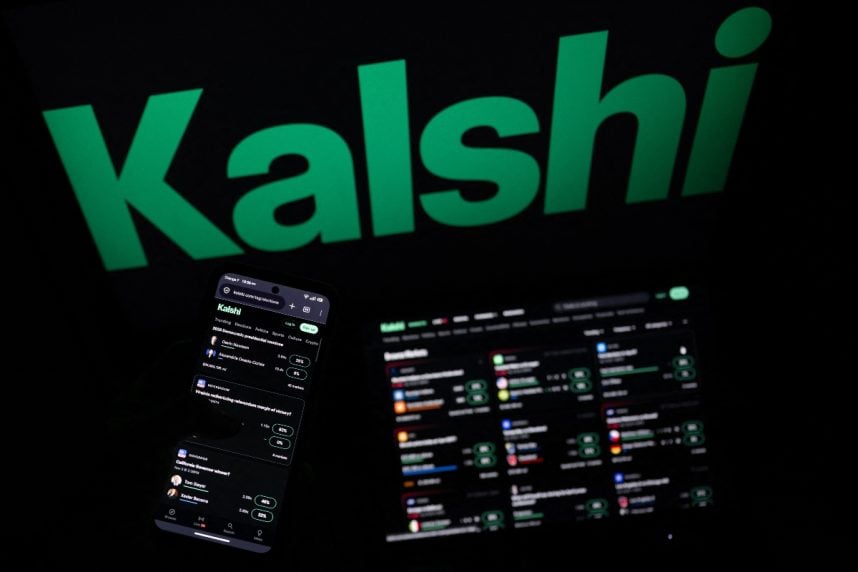
Sports business media outlet Sportico analyzed Kalshi’s publicly available data stored on Dune, a site that tracks prediction market trading volume, and concluded that the operation made “at least” $35 million in 2026 fees linked to bundled sports event contracts through April.
In sports betting, combining two or more bets into a single wager is called a parlay. Whether called a sports betting parlay or something else (DraftKings Predictions calls them Combos), the bundling positions come with longer odds and therefore a higher payout.
Parlays are highly profitable for sportsbooks, as they entice bettors to risk small wagers on the long-shot chance of winning a big return. The parlay-like options are big revenue-generators for prediction markets, too.
Parlay Prediction Market Trading
Sportico reports that Kalshi customers have lost $116.8 million on 2026 sports contracts grouped into single positions.
Unlike a sportsbook, Kalshi doesn’t typically act as the house on its traditional peer-to-peer contracts. When a trader combines multiple sports event contracts into a single trade, Kalshi needs someone on the other end.
The Commodity Futures Trading Commission (CTFC) federally regulates prediction markets. The CFTC prohibits exchanges from taking a side of a trade, requiring the platforms to only be intermediaries.
To solve the problem of needing an opposite side of a newly formed parlay, Kalshi contracts institutional market makers, with Pennsylvania-based Susquehanna International, a trading and technology firm, often taking the “No” position.
Kalshi and its third-party market makers have recently implemented marketing tools to encourage combo trades. When a sports contract is selected, the platform triggers a possible parlay for the trader that is supposedly “popular” with other traders.
The marketing ploy has increased combo trading and revenue for both Kalshi and the market maker, with proceeds split between them.
Trading Volume
Notional trading volume on Kalshi is at record levels. As of May, the prediction market is seeing about $4 billion in executed trades a week.
Kalshi has a 72% market share of the prediction market space in the US, and its dominance continues to grow. This week, Bloomberg reported that, for the first time in eight months, notional trading volume on Polymarket declined.
The business news group says volume on Polymarket’s offshore and US platform slowed roughly 9% to $10.3 billion in April. Meanwhile, Kalshi’s volume rose 13%.
Polymarket explained that trading volume was lower because the network was working on a “technical overhaul” designed to speed trading and execution.

 Most Read

Another Shooting Near Las Vegas Strip Casino Injures Man
 970,456 views

Vintners Oppose Napa Valley Casino
554,231 views


Conversation (0)
Be the first to comment on this article.