 Main menu

Prediction Markets
National Council on Problem Gambling Defends Kalshi Membership
Posted on: June 16, 2026, 07:27h.
Last updated on: June 16, 2026, 10:07h.


- The National Council on Problem Gambling is clearing up confusion as to why Kalshi is a member
- Kalshi claims it doesn’t offer gambling products but financial instruments
- The NCPG launched a financial services subcategory to include Kalshi
Kalshi is a prediction market that claims to offer trading on various financial instruments, so why is the platform a member of the National Council on Problem Gambling (NCPG)? Responding to this question, the NCPG says it has a responsibility to understand emerging products and the risk they might present to consumers.
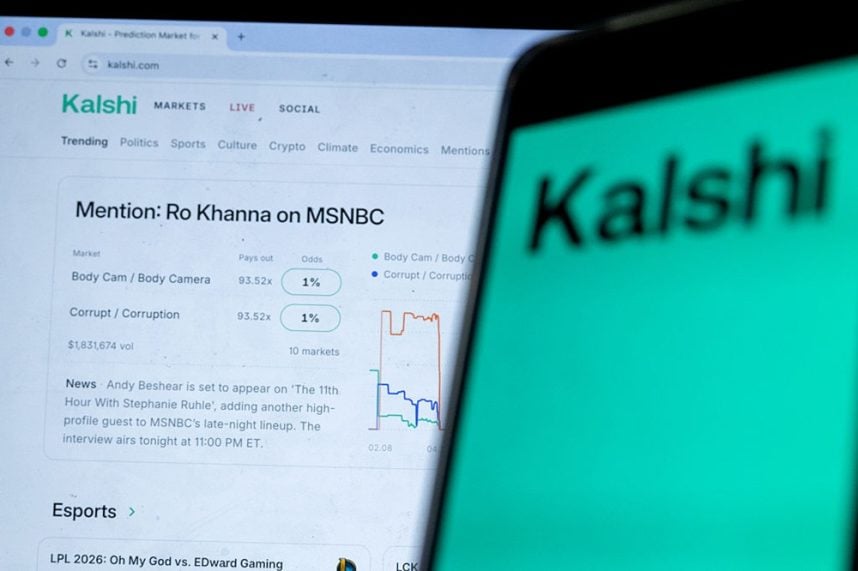
In May, the NCPG announced the formation of the Financial Services & Trading membership subcategory, with Kalshi the classification’s initial member.
Kalshi has repeatedly defended its platform against claims that it functions more like a casino than a financial exchange.
Critics cite Kalshi’s sports prediction markets, which allow traders to buy and sell shares of sports outcomes, and other controversial markets like the 10-minute price of bitcoin and what Vice President JD Vance might say during his appearance on “The View.”
The NCPG reports that the Financial Services & Trading Subcategory reflects the nonprofit’s commitment to “fostering informed dialogue, advancing research and education, strengthening consumer protections, and ensuring that individuals and families affected by gambling-related harm remain at the center of our work.”
Subcategory Explained
NCPG Executive Director Heather Maurer and NCPG Board President Derek Longmeier wrote in a message to members and stakeholders that the organization will continue to lead awareness and advocacy efforts to reduce gambling-related harms, regardless of whether a product meets the established definition of gambling.
“Today’s environment extends beyond traditional forms of gambling and increasingly includes online sports betting, gaming, cryptocurrency, financial trading platforms, prediction markets, and other activities that may function similarly to gambling,” the NCPG release explained.
Maurer and Longmeier said “platforms which methodologies present as gambling” must be understood and recognized by the NCPG.
“This is not about endorsing any product, platform, or industry. It is about recognizing that new forms of participation, including prediction markets and other emerging products, may present risks for some individuals,” Maurer added on a LinkedIn post.
“As a public health organization, we believe it is our responsibility to understand those risks, promote consumer protections, advance education and research, and ensure that people have access to support when they need it,” Maurer said.
The NCPG maintains its neutrality on the legalization of gambling and does not advocate for or against specific products. That stance extends to the emergence of prediction markets, federally regulated trading exchanges under the governance of the Commodity Futures Trading Commission.
NCPG Categories
The Financial Services & Trading Subcategory is the first subcategory at the NCPG. The nonprofit’s traditional membership categories are Platinum, Gold, and Silver.
Platinum is the highest tier, with corporations needing to pay $15,000 a year for membership benefits for up to 10 designated individuals. Gold runs $7,500 for five people, and Silver is $3,500 for three representatives.
Membership dues are reduced for government agencies and nonprofits. Dues for the Kalshi subcategory have not been made public, but the prediction market announced a $2 million contribution to the NCPG in May to support a “strategic initiative” focused on “trader health and safety.”

 Most Read

Another Shooting Near Las Vegas Strip Casino Injures Man
 968,332 views

Vintners Oppose Napa Valley Casino
553,566 views


Conversation (0)
Be the first to comment on this article.