 Main menu

Commercial Gaming
New Jersey Preps Supreme Court Petition in Kalshi Sports Betting Fight
Posted on: July 2, 2026, 08:53h.
Last updated on: July 2, 2026, 09:52h.


Key Points
- New Jersey is seeking more time to ask the Supreme Court to review a ruling that blocked enforcement against Kalshi's sports event contracts
- The state argues the Third Circuit's decision could strip every state of authority to regulate sports betting by placing prediction markets under exclusive federal oversight
- Officials are waiting for rulings in several similar cases that could create a split among appellate courts and boost the chances of Supreme Court review


New Jersey is poised to ask the U.S. Supreme Court to resolve the billion-dollar question: do the sports event contracts offered by prediction platforms constitute sports betting, or are they federally regulated financial derivatives?
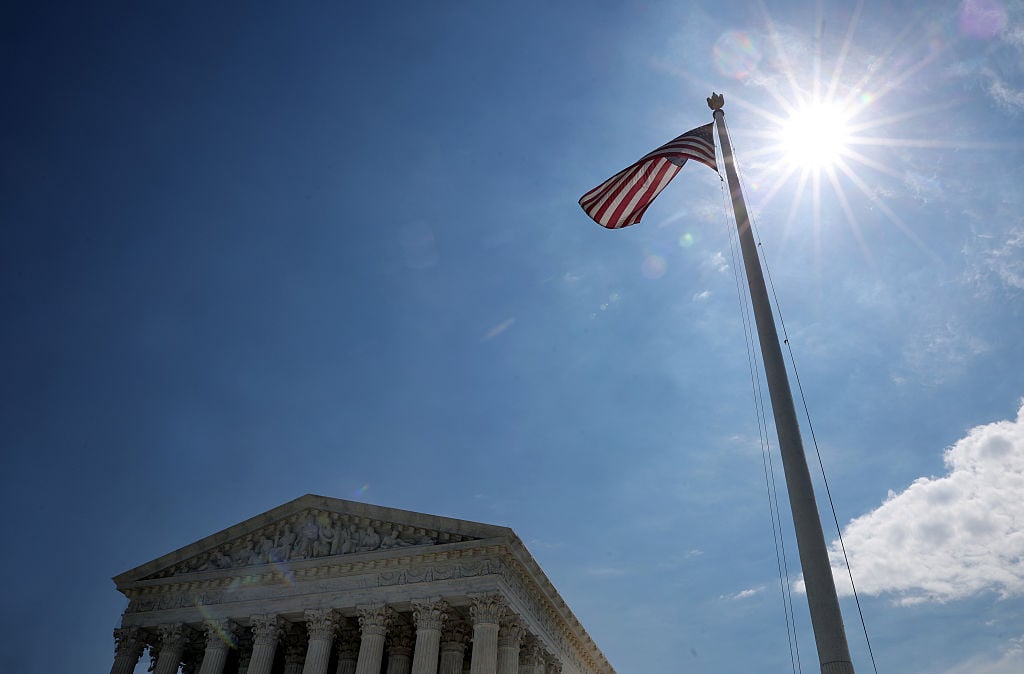
On Friday (June 26), Jeremy Feigenbaum, New Jersey’s solicitor general, wrote to the nation’s highest court requesting a deadline extension to file a petition, known as a writ of certiorari. The certiorari would ask the justices to review a federal appeals court ruling that blocked the state from enforcing its sports betting laws against Kalshi.
Feigenbaum said an extension was necessary because imminent rulings from the Fourth and Ninth Circuits and the Massachusetts Supreme Judicial Court on the same legal issue could help establish whether a split has emerged among appellate courts, strengthening the need for Supreme Court review.
New Jersey Lost Round One
On April 6, the Third Circuit federal appeals court ruled that the U.S. Commodity Futures Trading Commission (CFTC) has exclusive jurisdiction over Kalshi, preventing state regulators from blocking the prediction platform’s sports event contracts.
The ruling was a blow to New Jersey’s efforts to enforce its sports betting laws against Kalshi and other prediction market operators, which the state argues are offering illegal, unlicensed sports betting.
Kalshi had sued New Jersey in late March 2025 after receiving cease-and-desist letters from the state’s Division of Gaming Enforcement (DGE).
The company argued the state’s threat of enforcement infringed on the exclusive jurisdiction of the CFTC and that state law is preempted where it conflicts with federal law.
In late April, the district court granted Kalshi a preliminary injunction that prevented the state from enforcing its sports betting laws against Kalshi while the case proceeded.
The Third Circuit affirmed the injunction in a 2-1 decision, agreeing that Kalshi had shown it was likely to prevail on its preemption argument.
Lone Dissenter
U.S. Circuit Judge Jane Richards Roth was the lone dissenter on the appellate panel, writing that event contracts were “virtually indistinguishable from the betting products available on online sportsbooks, such as DraftKings and FanDuel.”
In his Supreme Court filing, Feigenbaum argued the Third Circuit’s decision could have sweeping consequences nationwide.
“This issue is tremendously important: The Third Circuit majority’s conclusion — that sports bets fall under the exclusive jurisdiction of the Commodity Exchange Act and that the Act preempts state regulation of these sports bets — would federalize a multibillion-dollar-a-year sports-wagering industry at the expense of every state law in the country,” he wrote.

 Most Read

Another Shooting Near Las Vegas Strip Casino Injures Man
 972,672 views

Vintners Oppose Napa Valley Casino
556,278 views


Conversation (0)
Be the first to comment on this article.