 Main menu

Legal
Ninth Circuit Grills Kalshi on Sports Event Contracts Offered on Tribal Lands
Posted on: July 14, 2026, 03:22h.
Last updated on: July 14, 2026, 04:26h.


Key Points
- Judges questioned why Kalshi’s Giants contracts should be legal on tribal land when equivalent DraftKings wagers are not
- The tribes argue federal commodities oversight cannot override IGRA and their authority over gaming conducted on reservation lands
- A reversal would not decide the lawsuit but could revive efforts to temporarily geoblock Kalshi on three reservations


Three California tribes asked the Ninth Circuit Friday (June 10) to revive their bid to keep Kalshi’s sports-event contracts off their reservations while a lawsuit over the markets moves forward.
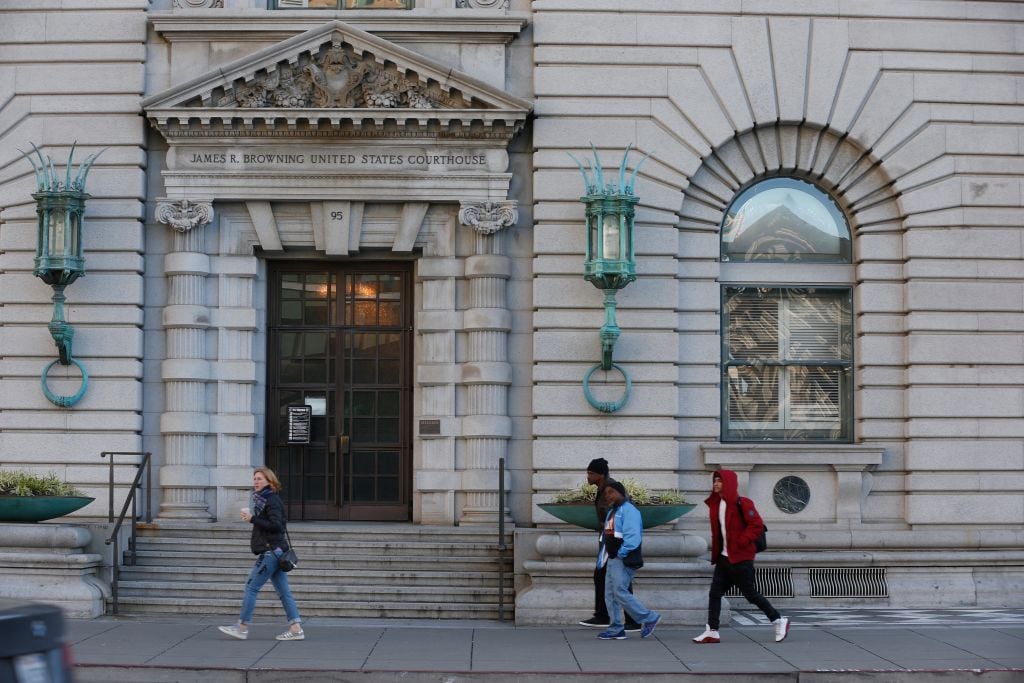
During oral arguments, Kalshi’s central legal position — that its sports markets are federally regulated derivatives rather than conventional bets — drew pointed questions from the three-judge panel, according to DeFi Rate’s coverage of the hearing.
The Blue Lake Rancheria, Chicken Ranch Rancheria of Me-Wuk Indians and Picayune Rancheria of the Chukchansi Indians are appealing U.S. District Judge Jacqueline Scott Corley’s November denial of a preliminary injunction.
The injunction would have prevented Kalshi from making certain yes-or-no sports contracts available to customers on the three tribes’ lands while the case proceeds.
It’s one of numerous cases playing out across the US over whether prediction-market sports contracts fall exclusively under federal commodities law or can also be regulated as gambling by states and tribal governments.
Federal Law Clash
Kalshi argues that contracts traded through its federally registered exchange fall under the Commodity Exchange Act, or CEA, and the exclusive jurisdiction of the Commodity Futures Trading Commission (CFTC).
The California tribes contend Kalshi is effectively offering unauthorized sports betting on their lands in violation of the Indian Gaming Regulatory Act (IGRA).
IGRA generally requires Class III gaming, which includes sports betting, to be conducted under an approved tribal-state compact or equivalent federal arrangements.
Picayune operates under a compact, while Blue Lake and Chicken Ranch conduct Class III gaming under procedures issued by the Interior Department after compact negotiations failed.
Giants Hypothetical Puts Kalshi on the Spot
Judge M. Margaret McKeown asked Kalshi attorney Grant Mainland to imagine someone on tribal land buying a contract that paid out if the San Francisco Giants won, while also trying to place an equivalent wager through DraftKings.
“So, in your view, the first one would be allowed, the Kalshi, but not the DraftKings?” McKeown asked, as reported by DeFi Rate.
Mainland responded that federally designated contract markets were regulated differently from sportsbooks. McKeown cut to the chase: “So the answer is yes.”
Tribes Say IGRA Still Applies
The tribes argue that federal commodities oversight does not override IGRA. Tribal attorney Lester Marston told the panel that conduct assumed to be lawful outside a reservation could become illegal once carried out on tribal land, according to the hearing record.
Kalshi urged the court to ignore the question of whether its products amount to gambling. Mainland instead focused on whether the tribes are legally entitled to bring this particular IGRA claim.
IGRA authorizes lawsuits to stop Class III gaming conducted on Indian lands in violation of an effective tribal-state compact. Kalshi argues that the tribes have not identified any provision in a compact or federal gaming procedure that its contracts breach.
That argument helped Kalshi defeat the injunction before Corley in November. According to Corley’s order, Picayune’s compact and the federal procedures governing Blue Lake and Chicken Ranch described the gaming activities the tribes could operate but did not address what an outside company such as Kalshi could offer online.
Corley also concluded that the challenged online transactions fell under the Unlawful Internet Gambling Enforcement Act, or UIGEA. The law excludes transactions conducted on or subject to the rules of an entity registered under the CEA from its definition of a “bet or wager.”
Corley found that the exclusion covered Kalshi’s contracts even when customers accessed them from tribal lands.
The tribes counter that UIGEA expressly says it should not be interpreted as altering federal or state gambling law or any tribal-state compact. They contend Corley’s interpretation allowed the federal commodities framework to displace IGRA without Congress clearly saying it should.
What Next?
Friday’s arguments did not determine whether Kalshi’s sports contracts are ultimately lawful on tribal reservations. The Ninth Circuit is considering only whether Corley was right to deny temporary relief.
A reversal would not permanently ban Kalshi or decide the underlying lawsuit. It could send the injunction request back to Corley for further consideration and eventually lead to Kalshi and its partners being required to block transactions originating from the three tribes’ lands while the case plays out.

 Most Read
Another Shooting Near Las Vegas Strip Casino Injures Man
 965,644 views

Vintners Oppose Napa Valley Casino
552,964 views


Conversation (0)
Be the first to comment on this article.