 Main menu

Sports Betting
Puck Drops Here: Volatility Shares Files Plans for NHL ‘Betting’ ETFs
Posted on: August 17, 2026, 09:08h.
Last updated on: August 17, 2026, 09:08h.


Key Points
- The issuer filed plans for ETFs linked to all 32 NHL teams
- If approved, the funds will invest in CME futures
- Those derivatives are linked to FutureSports indexes


Exchange traded funds (ETFs) issuers often push the envelope, but Volatility Shares may be going further with a recent filing for funds that would be de facto bets on the performances of all 32 NHL teams.
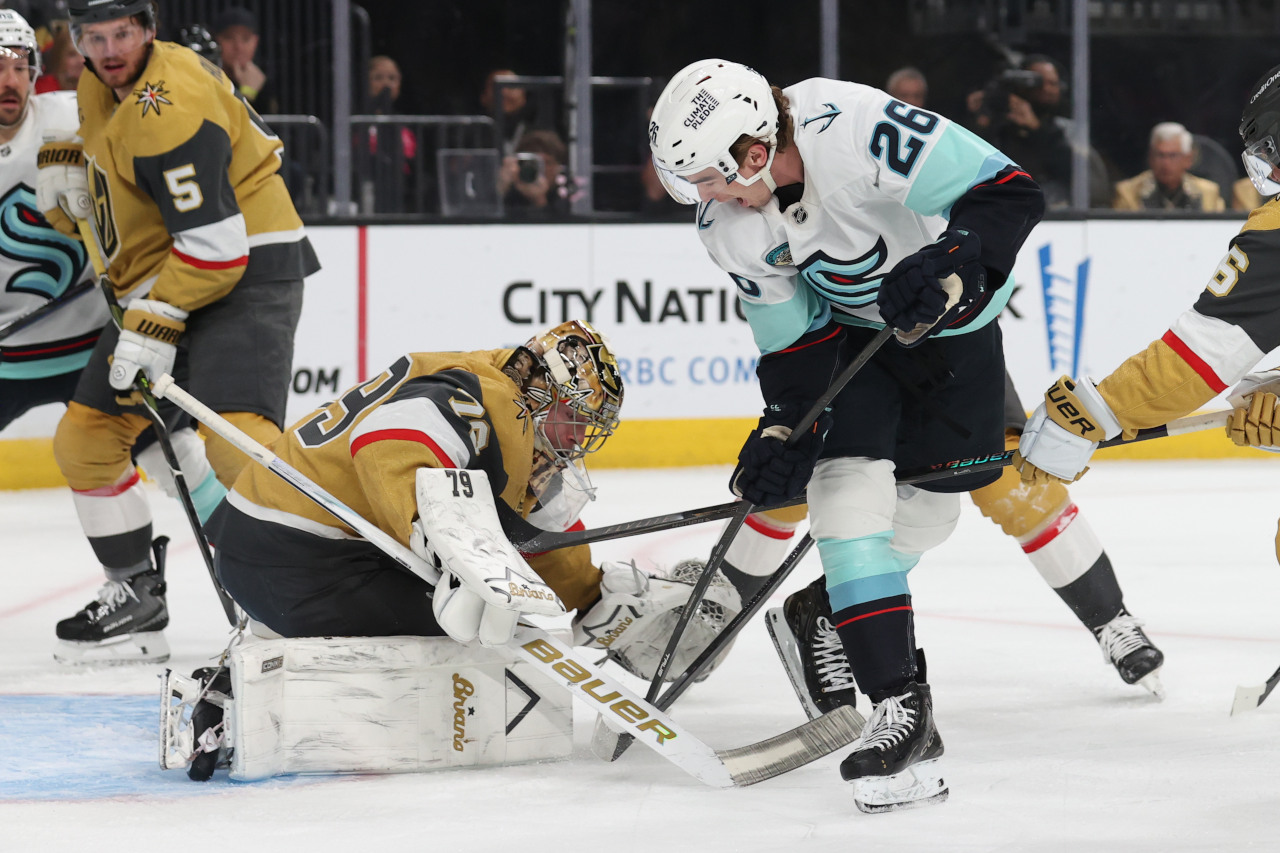
In an Aug. 14 filing with the Securities and Exchange Commission (SEC), the upstart ETF sponsor revealed plans to introduce funds that presumably will move up and down in correspondence with the play of the various NHL franchises.
If approved, the ETFs will invest in CME Group (NASDAQ: CME)-listed futures based on FutureSports Performance Indexes (FSPI). Last month, CME and the index provider announced a partnership in which the exchange operator will list derivatives tied to those indexes, which are designed to measure the performances of college and professional athletes and teams. In a statement out last week, CME announced that the NHL futures will be available on Sept. 28.
“CME Group Hockey futures will be available in standard-sized contracts, valued at 10x the value of the underlying CME FSPI NHL indexes, and micro-sized contracts that are 1/10 the value of those indexes,” according to the financial services company. “Participants can trade live around the clock, allowing for immediate positions on a regulated exchange with central clearing safeguards, transparent pricing and equal market access.”
Volatility Shares ETFs Still Need to Clear Regulatory Hurdles
A possible interpretation of the proposed Volatility Shares ETFs is that the funds fill a void somewhere between traditional sports betting and the event contracts featured on prediction markets.
How the SEC treats these unique products remains to be seen. The Volatility Shares filing for the NHL ETFs doesn’t contain expense ratios or tickers, which are usually signs that an ETF is close to coming to market. Additionally, the commission is applying more scrutiny to what it deems to be “novel” ETFs, including those that may be viewed as betting via the ETF wrapper.
That was the treatment extended to dozens of proposed ETFs that would provide access to political event contracts traded on prediction markets. The commission halted the approval process for those funds in May and opened a 60-day public comment period on those funds in late June.
That doesn’t imply the Volatility Shares NHL funds will meet the same fate, but the ETFs may well be considered “novel” by regulators.
How the Volatility Shares ETFs Will Work
In the filing, Volatility Shares makes clear that its NHL ETFs will not invest in event contracts or any other instrument related to prediction markets. Rather, the funds will hold derivatives linked to the FutureSports indexes.
Those indexes start at values of 7,500. So the benchmark for the defending Stanley Cup champion Carolina Hurricanes likely opens at that price and fluctuates based on the team’s performance. Should the champs (or any other team) rattle off a 10-game winning streak, the FutureSports index, and thus derivatives tied to it, likely rises. Conversely, a long losing skid would send a team gauge plummeting. Volatility Shares cautions that these funds could be “inherently speculative.”
“Successfully investing in Hurricanes Index Futures Contracts requires that the team tracked by the index performs well statistically over the course of a season, an outcome that is inherently uncertain and subject to numerous unpredictable variables, including player health, competitive dynamics, coaching decisions, and random variation in athletic performance,” according to the regulatory document. “The Hurricanes Index may decline in value, and there can be no assurance that the team tracked by the index will perform at or above the levels implied by the prices of Hurricanes Index Futures Contracts at the time the Fund obtains exposure.”

 Most Read

Another Shooting Near Las Vegas Strip Casino Injures Man
 970,184 views

Vintners Oppose Napa Valley Casino
554,156 views





Conversation (0)
Be the first to comment on this article.