 Main menu

b2b
Stake Goes Dark in Brazil Again After Court Vacates Temporary Injunction
Posted on: October 13, 2026, 07:36h.
Last updated on: October 13, 2026, 10:01h.

Key Points
- Stake Brazil has been forced offline again after a federal appeals court suspended an injunction allowing it to resume operations
- The court ruled that allowing Stake to operate while other betting companies remained banned would undermine government policy
- Brazil's Supreme Court is expected to consider the wider gambling ban after the October 25 presidential runoff election


Stake’s brief return to Brazil’s online gambling market came to a abrupt halt after a federal appeals court overturned an injunction that had temporarily shielded the crypto casino operator from the country’s blackout list.
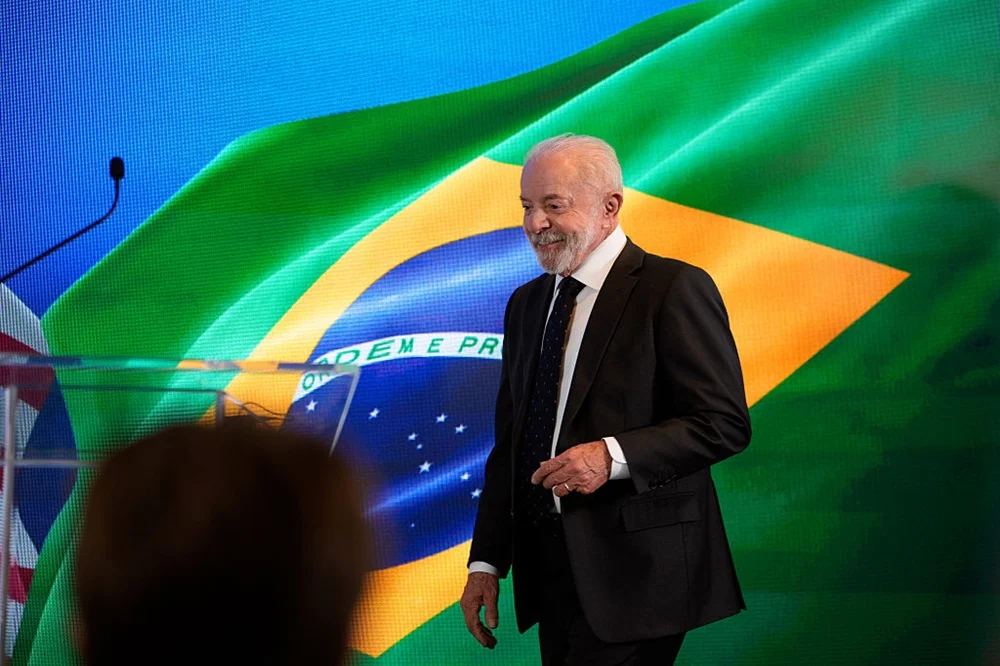
The decision was issued by the Federal Regional Court of the 3rd Region (TRF-3) following an emergency appeal filed by Brazil’s Attorney General’s Office (AGU).
The reversal came just two days after a São Paulo federal judge granted Stake temporary protection from the ban, allowing it to resume operations until October 25.
At the time, Stake declared the ruling “an important signal” for both the operator and the broader Brazilian gaming sector. However, while Stake’s website and mobile application briefly re-entered service on Oct. 8, they were rendered inaccessible again by Oct. 10.
When Casino.org attempted to access Stake Brazil via a Brazilian VPN, it received a notice saying that operations were suspended.
“On October 8, 2026, a federal court ruling authorized Stake Brazil to resume operations. However, that decision was overturned by the Federal Regional Court of the 3rd Region. As a result, Stake Brazil’s website and app have once again been unavailable since October 10, 2026,” the notice said.
“We sincerely apologize for this situation,” it added.
Exemption Would Undermine Federal Ban, Judge Rules
TRF-3 Judge Luis Antonio Johonsom di Salvo ruled that allowing a single commercial operator to continue taking wagers while competitors remained banned was legally indefensible.
“The fact that only one company remains authorised to regularly carry out economic activity while the others are subject to restrictions established by the Public Authorities demonstrates a regulatory asymmetry capable of affecting the execution of the implemented public policy,” he said.
The AGU has aggressively defended the federal prohibition against a wave of emergency injunctions from operators and trade bodies. Defense attorneys contend the executive branch acted on concrete empirical data gathered since Brazil’s regulated betting framework took effect in 2025—specifically citing rising household indebtedness and problem gambling metrics.
Supreme Court Ruling Awaited After Presidential Election
The long-term status of Brazil’s commercial gaming sector remains highly volatile.
While Supreme Court Justice Luiz Fux is reviewing a constitutional challenge against the provisional measure, he has signaled he will withhold any ruling on suspending the ban until after the upcoming presidential election.
Brazil is set to hold its presidential election runoff on Oct. 25. Political prediction markets currently give opposition candidate Flávio Bolsonaro an 87% chance of defeating incumbent President Lula.
While both political figures have voiced criticism of the industry, Bolsonaro has publicly questioned the abrupt timing of Lula’s shutdown. Bolsonaro has suggested that sports betting and online casino gaming should be subject to separate regulatory models, opening a potential path to a partial market reopening under his administration.
Meanwhile, major economic trade groups are warning of severe fiscal fallout if the prohibition persists.
A recent study by LCA Consultores estimated that the prohibition could put R$73 billion ($14.7 billion) in tax revenue at risk over the next four years.
The research also warned that more than 15,500 jobs could be lost if the ban remains in place.

 Most Read
Another Shooting Near Las Vegas Strip Casino Injures Man
 972,593 views
Vintners Oppose Napa Valley Casino
556,211 views


Conversation (0)
Be the first to comment on this article.